+32 329 293 0116
 +31 (0)97 010 251 091
 +27 (0)60 014 4200
 +44 (0)20 4538 7771


Have you ever wondered what it really takes to maintain sobriety and prevent a setback? Effective alcohol relapse prevention means understanding your personal triggers, building a support network, and, when needed, getting structured help through alcohol rehab so you have the tools to stay on track long term.
What Is Alcohol Relapse and How Can You Prevent It?
Staying sober is rarely a straight path, and recognising how relapse develops gives you the power to act before a drink feels inevitable. Understanding the stages and warning signs helps you strengthen your coping strategies and reduce the risk of relapse when life gets difficult.
A Relapse Is a Process, Not Just a Single Event
A relapse is when you return to drinking after a period of sobriety, and it’s far more common in recovery than many people admit. It’s a signal that your coping mechanisms need adjusting, whether you’ve been sober for weeks or years. People in recovery often face unexpected triggers like stress, social pressure, or emotional pain that reignite old habits before they realise what’s happening.
Relapse usually begins with subtle shifts in your mood, routine, or behaviour long before you pick up a drink. You might notice a growing craving, start isolating from your support network, or slip back into patterns that once fuelled your alcohol use. Recognising these early warnings gives you a chance to intervene and protect your sobriety.
How Does Relapse Develop Through Three Stages?
Specialists often describe relapse as a three-stage journey: emotional, mental, and physical. Each stage carries distinct warning signs, and spotting them early dramatically reduces the risks of a full return to drinking.
During emotional relapse, you’re not yet thinking about drinking, but your behaviour might be laying the groundwork. You could be skipping meetings, neglecting self-care, or bottling up feelings that eventually trigger a craving. Left unchecked, this emotional disconnection can quietly erode the coping strategies that keep you sober.
Mental relapse is where the internal battle begins. Part of you wants to stay sober, while another part romanticises past drinking or starts bargaining with yourself. You might find yourself planning a lapse, testing whether you can “just have one,” which is why having an aftercare plan and immediate support is critical.
Lastly, the physical relapse is where you actually drink. Even one drink can lead to more if you’re not careful.
What Are the Three Types of Alcohol Relapse?
A lapse, sometimes called a slip, means you’ve had a drink but stopped quickly, often because you recognised the danger. It’s a serious warning sign, not permission to carry on, and it usually points to a specific trigger or moment when your guard dropped. Treating it as a learning opportunity can prevent a full-blown relapse.
A full relapse means returning to uncontrolled drinking and abandoning the recovery behaviours that supported your sobriety. This stage carries a high risk of physical harm and emotional fallout, so don’t try to manage it alone. Reaching out to someone who understands how to help a loved one with alcoholism, or reconnecting with an inpatient programme or support group, can help stabilise you quickly.
Chronic relapse describes a painful cycle of repeated attempts at sobriety followed by returning to alcohol use. Often, this pattern signals deeper issues such as untreated mental health conditions or a fragmented support network. Long term solutions usually require a comprehensive aftercare plan, ongoing therapy, and peer support to reduce the risks and break the cycle for good.
What Are the Common Triggers and Risk Factors That Cause People to Relapse?
Understanding what drives you back toward drugs or alcohol is the foundation of any solid relapse prevention plan. When you can name the patterns that weaken your resolve, you’re already taking the most important step to prevent relapse.
Environmental Triggers Are a Leading Reason People Relapse
Your surroundings can quietly pull you toward old behaviours without you noticing. Certain people, places, or events tied to past substance use can spark powerful cravings. A pub, party, or even a specific street corner can make the urge to drink or use drugs feel overwhelming. That’s why identifying these high risk environments is a critical part of relapse prevention.
Triggers aren’t always obvious, they can appear at home or work too. Seeing old bottles, photos from drinking days, or running into former using mates can unsettle your recovery. Small but deliberate changes, like clearing your home of alcohol or organising substance free social activities, can protect your progress. These simple shifts often make the difference between staying steady and experiencing a relapse.
Emotional and Psychological Triggers Can Derail Your Relapse Prevention Plan
Negative emotions are among the biggest drivers of addiction relapse. Stress, anxiety, anger, and loneliness can wear down your self-control and make old coping mechanisms seem tempting. Alcohol-related depression is one of the most significant emotional triggers. Low mood can build quietly during recovery and, if left unaddressed, become a powerful pull back toward drinking.
Psychological factors like low self-esteem, guilt, or boredom can deepen the risk, especially when you’re tired or sleeping poorly. These mental states can convince you that one drink won’t matter, which is a dangerous trap.
Physical and Social Triggers Increase Alcohol Relapse Risk
Physical discomfort can quietly restart old patterns if you’re not prepared, significantly increasing alcohol relapse risk. Alcohol withdrawal symptoms, such as shakiness, headaches, and insomnia, can make cravings feel unbearable and cloud your judgement.
Moreover, fatigue and illness also lower your defences, making it easier to justify ‘just one’ drink or dose. Attending to your physical health is a non negotiable part of any relapse prevention plan.
Social pressure can be equally challenging, especially from friends or family who still drink or use drugs. Gatherings where alcohol is centre stage can test your willpower, particularly if others don’t know about your recovery.
What Relapse Prevention Techniques Actually Help Prevent Alcohol Relapse?
Building a solid relapse prevention plan means having practical tools ready for when cravings hit. These techniques help you manage the emotional, mental and physical stages of relapse so you can stay on track.
Build a Relapse Prevention Plan with Practical Coping Strategies
A tailored relapse prevention plan should include structured routines that keep your day predictable. Daily check-ins with support groups like Alcoholics Anonymous and keeping a crisis contact list for “just in case” moments are essential relapse prevention tools.
The HALT method (Hungry, Angry, Lonely, Tired) helps you pause and assess what’s really going on beneath a craving. Working with a therapist can help you identify underlying issues that lead to relapse, while a short daily journal helps you track what’s working and what needs adjusting.
Use Mindfulness and Meditation as Relapse Prevention Tools
Mindfulness meditation helps you notice the thought of using or drinking alcohol without immediately reacting. Even five minutes can interrupt the mental relapse stage and give you space to choose a different response.
When cravings appear, try these simple exercises: deep breathing calms your nervous system in about five minutes, a body scan helps you notice physical sensations tied to cravings, and thought watch lets you observe thinking about using without judgment. Pairing these practices with therapy and community support strengthens your ability to stay sober and remain patient with yourself when life feels overwhelming.
Make Self-Care Central to Your Relapse Prevention Plan
Self-care is the foundation of alcohol relapse prevention. Looking after yourself physically through movement, balanced meals, and getting enough sleep directly impacts your ability to handle stress and avoid drinking alcohol.
Build a routine that fits your recovery goals, such as daily walks, gentle stretching or yoga, regular mealtimes, and aiming for 7 to 9 hours of sleep. These habits help reduce the possibility of relapse and keep your mind clear.
Emotional self-care matters just as much. Therapy, support groups, practising gratitude, and surrounding yourself with supportive people who understand your recovery journey all help you stay on track. When you take care of your whole self, long-term recovery becomes more achievable.
How Do You Build a Personal Relapse Prevention Plan?
A clear relapse prevention plan helps you spot personal risk factors, manage cravings, and act fast if you start slipping. It’s about tracking warning signs, developing solid coping skills, and tweaking your approach as you go.
Start by Identifying Your Personal Warning Signs for Relapse
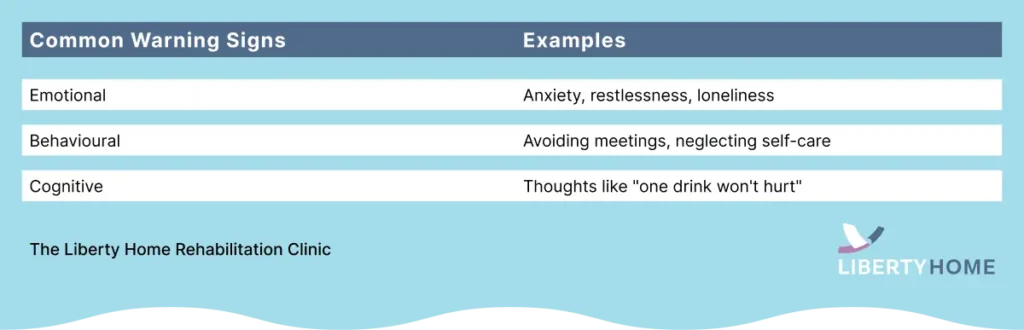
Relapse rarely happens overnight. People relapse gradually through distinct stages of relapse, emotional, mental, and physical, often weeks before any drug or alcohol use occurs. You might notice mood swings, irritability, pulling away from supportive people, or becoming complacent about your period of sobriety. Catching these early clues gives you a vital chance to step in before a full-blown relapse unfolds.
A simple checklist helps you track these warning signs daily. The table below shows common categories to monitor, especially if you’re dealing with co-occurring mental health issues alongside drug and alcohol addiction. Writing down even brief notes builds awareness of what tends to trip you up.
Set Up Practical Tools and Coping Skills to Prevent Relapse
Once you’ve identified your triggers, you need practical tools and strategies for the tough moments. Coping skills might be as simple as deep breathing, calling someone you trust from your strong support network, or heading to a support meeting.
Keep a list of safe activities for when you need a quick distraction from thoughts of using drugs or alcohol. Surround yourself with supportive people who understand your recovery process and can help you avoid returning to old habits.
Furthermore, try organising your plan around these three areas: Internal tools (breathing, mindfulness, short reflections), External tools (phone contacts, therapy, online support groups), and Emergency actions (a clear step-by-step plan for when cravings spike).
Review and Adjust Your Relapse Prevention Plan Regularly
Your relapse prevention plan should evolve as you grow more confident in your recovery from alcohol or drug addiction. Regular check-ins, whether weekly or monthly, help you spot what’s working and what needs refreshing as part of your ongoing addiction treatment. Some strategies may lose their punch, or new triggers might pop up as your life changes.
Take time to reflect on recent challenges, noting any cravings, mood shifts, or tricky moments you managed well. Share updates with a counsellor, support group, or sponsor for honest feedback tailored to your needs. This reflection is a vital part of the recovery process, not a sign of weakness.
If you do experience a slip, remember that relapse doesn’t mean failure, it’s simply a signal that your plan needs adjustment. Getting back on track is about learning, not punishing yourself. Keep your plan real and up to date, and take it one day at a time.
How Can Support Systems and Aftercare Help Prevent Relapse?
Staying sober long term often comes down to the support you have after drug and alcohol treatment. Strong social connections give you accountability and motivation, two things that make lasting progress a lot more doable and reduce the possibility of relapse.
Support Groups Form the Foundation of Any Relapse Prevention Plan
In many peer support settings, you might meet a sponsor or mentor, someone who’s been at this for a while and can offer not just advice, but a listening ear and real-world support. Mentors often draw from their own experience and help you figure out how to actually use recovery principles in daily life, which is essential when a relapse feels imminent.
Research shows active connection to support groups makes a measurable difference. In a randomised controlled trial of 345 adults entering a new outpatient treatment episode for substance use disorders and patterns of drug use, participants receiving intensive referral to 12-step self-help groups attended more meetings and had higher abstinence rates than those with standard referral. Across both 6-month and 1-year follow-ups, 70% of the intensive referral group attended at least one meeting per week versus 61% with standard referral, and abstinence rates were 51% versus 41%.
This demonstrates that actively connecting people to peer support groups and monitoring participation can modestly improve abstinence outcomes over a year compared with providing information and encouragement alone. When you’re linked to others who understand addiction relapse firsthand, you’re less likely to fall back into old habits.
Building Peer Support Networks Helps Prevent Relapse on the Road to Recovery
A solid peer support network means you’ve got people in your corner even when you’re not in a formal treatment setting. You’ll run into peers through recovery groups, community meetups, or online spaces focused on sobriety. These relationships are a two-way street, sharing advice and swapping stories about the ups and downs of the process of recovery.
Peer networks come in all shapes, including mentorship pairs where one person backs up someone new to recovery; small accountability groups where people check in and talk about how things are going; and community-based programmes for getting together and doing something healthy and social. These networks create a circle of people who support each other through difficult moments and help you take care of yourself physically by reminding you to rest and eat well.
Having this structure in place means that when someone returns to difficult situations or faces triggers, they have immediate access to understanding allies. This connectivity is a powerful buffer against relapse on the road to recovery, keeping you steady when the stage of relapse begins.
Family and Friends Play a Vital Role in Relapse Prevention
Your family and friends can make a real difference, and their willingness to learn about addiction matters more than you might expect. Sometimes, loved ones need a bit of education themselves so they know how to spot triggers and react in ways that actually help, especially if alcohol may be present in social situations or if someone returns to drinking.
Bringing close contacts into aftercare planning, such as joining counselling or helping build a relapse prevention plan, can boost trust and communication. Family can pitch in with the practical stuff too: keeping routines in place, helping manage stress, or making sure you don’t miss appointments. They can also remind you to take care of yourself physically by ensuring you eat well and get rest.
When friends and relatives are involved, they become a real pillar of your support system, helping you keep things steady as you move forward. Their involvement reminds you that relapse isn’t a personal failure but a signal to strengthen your support network, and that seeking help is part of recovery. Relapse may feel like a step backward, but with the right people around you, warning signs of relapse, like isolating yourself or missing meetings, become easier to spot and address.
Find Support for Alcohol Relapse Prevention at Liberty Home
At Liberty Home, we understand that alcohol relapse prevention is a journey, and we’re here to support you every step of the way. Our compassionate team is dedicated to providing personalised care and practical tools to help you build a stronger, healthier future. Reach out to us today to explore your options and discover how we can help you on your path to lasting sobriety.
Frequently Asked Questions
What strategies are most effective for maintaining long-term sobriety?
Effective strategies include daily routines, emotional self-checks, and self-care practices. Tools like the HALT method (checking for hunger, anger, loneliness, or tiredness) can help manage stress.
How can one recognise the signs of an impending relapse?
Early signs of relapse may include irritability, poor sleep, social withdrawal, or frequent thoughts about drinking. Recognising these changes can prompt proactive use of coping strategies or seeking support.
What role does a support system play in preventing a relapse?
A strong support system provides encouragement, accountability, and perspective during challenging times. Regular contact with trusted individuals or groups can significantly aid in maintaining sobriety.
Are there any particular stress management techniques that help in relapse prevention?
Mindfulness techniques such as deep breathing, progressive muscle relaxation, and the SOBER method (Stop, Observe, Breathe, Expand, Respond) can effectively manage cravings and emotional stress.
How should one modify their environment to reduce the risk of relapse?
Removing alcohol, avoiding triggers, and creating a calm, supportive environment can reduce relapse risks. Establishing new routines and engaging in alcohol free social activities also promotes long-term sobriety.
What steps can be taken to develop a strong relapse prevention plan?
Identify personal triggers and warning signs, and create a plan to address them. Include a list of trusted contacts for support and establish healthy daily habits. Liberty Home can assist in developing a tailored relapse prevention plan.