+32 (0)9 293 01 16
 +31 (0)97 010 251 091
 +27 (0)60 014 4200
 +44 (0)20 4538 7771

Xanax (alprazolam) is a fast-acting benzodiazepine. People often ask “how long does Xanax last?” and “how long does it stay in your system” because those can mean different things.
This guide explains both: how long the effects may be felt, and how long Xanax may be detectable on common drug tests such as urine, blood, oral fluid, and hair. Detection times vary based on dose, frequency of use, and individual factors. If you’re concerned about your use, you can also read more about Xanax addiction treatment.
Quick answer
- Effects: Xanax is fast-acting. Many people feel effects within 30–60 minutes, with the strongest effects in the first few hours.
- Detection (drug tests): Xanax can be detectable longer than the effects last, and timing varies by dose, frequency, metabolism, and lab cut-offs.
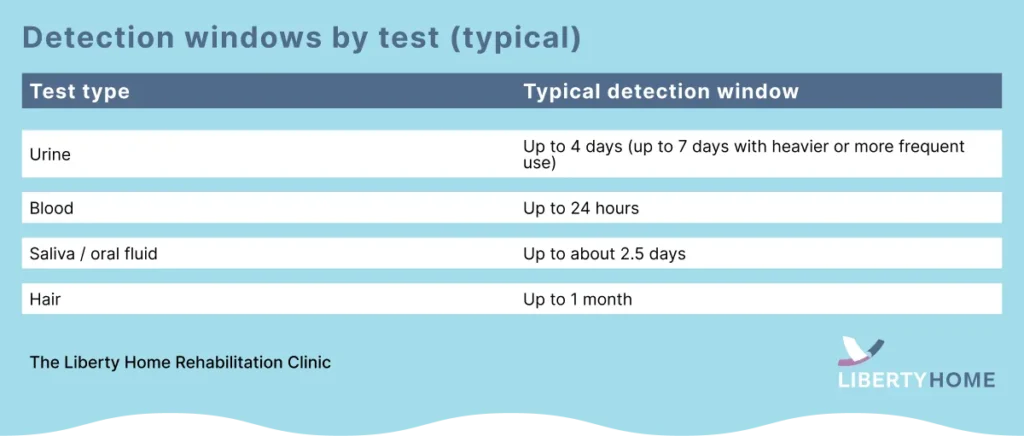
- Urine: up to 4 days (up to 7 days with heavier or more frequent use)
- Blood: up to 24 hours
- Saliva: up to about 2.5 days
- Hair: up to 1 month
- Why it varies: Dose, frequency, metabolism, and liver function can all change both how long it’s felt and how long it’s detectable.
What Is Xanax (Alprazolam)?
Xanax, or Alprazolam, is a benzodiazepine medication that is primarily used to treat anxiety and panic disorders. It is a central nervous system depressant. Xanax works by amplifying the effects of gamma-aminobutyric acid (GABA). In doing so, it creates a sense of calmness that relaxes the brain. It can also be used as an off-label muscle relaxant and sedative and it can stay in the system for quite a while, depending on the body composition of a person.
Half-Life of Xanax
Xanax has a half-life of about 11 hours, which means that half of it has been eliminated from the body in about 11 hours. This number, however, is for generally healthy people. In some people, the half-life can be longer, which may extend how long it remains detectable.
Half-life helps explain why effects can wear off in hours while tests may detect the drug or metabolites for longer
How Long Does Xanax Stay in Your System on Drug Tests?
Xanax can show up on drug tests. For the most part, this is not something that most people have to worry about as Xanax is legal with a prescription and is not an illicit substance. The length of time it can take to detect Xanax will depend on the test that is administered.
A urine test, which is one of the most common drug tests used due to its noninvasive nature, may detect it for up to 4 days after a person uses it, though this can be up to a week for heavy users. A blood test may detect Xanax up to a day after the last use.
Saliva (oral fluid) tests may detect Xanax about 2.5 days after the last use. A hair test can have the longest detection window, as it can detect Xanax up to a month after a person stops taking it.
Hair tests can have a longer detection window and may detect Xanax for up to 1 month.
Xanax is meant to be a short-term treatment and can be addictive.
Why Detection Times Can Vary
Even with the same test, Xanax detection windows can differ from person to person. Common reasons include:
- Immediate-release (IR) vs extended-release (XR): XR versions are designed to release alprazolam more slowly, which can extend how long effects are felt and may influence how long it remains detectable.
- Body fat and distribution: Alprazolam can distribute into body tissues. Differences in body composition may affect how long it takes your body to fully clear it.
- Drug interactions (CYP3A4): Xanax is processed mainly through a liver enzyme called CYP3A4. Substances that slow this pathway can increase alprazolam levels and potentially prolong both effects and detectability.
If you’re taking other medications or feel unusually sedated, speak to a clinician before making any changes, as interactions can increase risk.
Factors Impacting How Long Xanax Stays in Your Body
There are a number of factors that can influence how long Xanax lasts in a person’s system. These factors can include:
Metabolism
A person’s metabolism will have a major impact on how long Xanax stays in their system. Healthy people with faster metabolisms will generally flush Xanax out of their systems faster than those with slower metabolisms.
Age
On a related note, a person’s age can also influence how long a dose of Xanax remains in a person’s system. As people get older, their metabolism generally slows down. This can affect how long it takes to eliminate Xanax from the body.
Liver function
Like many medications, Xanax is metabolised in the liver. Impaired liver function can affect its ability to metabolise Xanax and other drugs, thereby prolonging its presence in a person’s body.
Kidney Function
Related to the above, while the kidneys aren’t as prominent in metabolising Xanax as the liver is, impaired kidney function can still affect how long it stays in the system after the last dose.
Dosage and Frequency
One of the most influential factors in how long Xanax lasts in a person is the dosage and frequency of use. Frequent usage can lead to Xanax being accumulated in a person’s body, which can increase the length of time that it stays in the system.
Polysubstance Use
Substances such as illicit drugs, other medications, or alcohol can interact with Xanax in a variety of ways. These interactions can affect how long Xanax remains detectable.

How Long Do the Effects of Xanax Last?
Xanax is a fast-acting medication and many people can feel its effects within around 30 minutes. However, the effects of Xanax are brief and usually hit their apex within 2 to 4 hours, though some people may have lingering feelings. The factors listed above can influence how long these effects and lingering feelings last.
Withdrawal Symptoms
When a person is unable to take Xanax for whatever reason, they may go through several withdrawal symptoms, which are often the opposite of the drug’s effects when ingested.
Withdrawal symptoms for Xanax can include insomnia, panic attacks, restlessness, muscle spasms, headaches, and sweating. In extreme cases, a person may have seizures or become delirious.
Some people may develop Post-Acute Withdrawal Syndrome or PAWS. This is when they feel lingering effects such as depression or anxiety, drug cravings, memory troubles, cognitive impairment, a low tolerance for stress, and difficulty interacting with others. These effects can last weeks or months after the last Xanax dose.
Xanax Addiction Treatment
Some people may use Xanax for purposes other than treating anxiety or panic disorders and become addicted. Even if they use it for those who use the medication with a prescription, they may still become dependent due to how addictive Xanax is.
While people do abuse Xanax, there are recovery options available. A treatment plan will generally involve detox, behavioural therapies, holistic treatments, and residential care. Because Xanax is used to treat anxiety, Dual Diagnosis treatment may be needed to address not just the addiction, but also the co-occurring anxiety or panic disorder.
Recovery is Possible
While many people take Xanax out of necessity, some may find themselves becoming dependent on it to function normally. Substance use disorders can be distressing and people who are afflicted by it may want to find treatment to help them with their conditions.
Liberty Home offers world-class primary treatment and sober living care to people who struggle with substance addiction. Contact us to learn more.
Frequently Asked Questions
How long does Xanax last?
Xanax’s noticeable effects typically last hours, but the exact duration depends on dose, formulation, and individual factors such as metabolism.
How long does Xanax stay in urine?
Xanax may be detectable in urine for up to 4 days after last use, and up to 7 days in heavier or more frequent use.
How long does Xanax stay in your system?
It depends what you mean. Effects may last around 4–6 hours, but drug tests can detect it for longer. Typical windows are up to 4 days in urine (up to 7 days with heavier use), up to 24 hours in blood, and up to about 2.5 days in saliva.
How long does a Xanax last in a day?
A single dose typically affects people for around 4–6 hours, though some people notice residual sedation into the rest of the day. If you’re using it more often to feel normal, that can be a sign of tolerance or dependence.