Equine Assisted Therapy for Substance Use Treatment

Home Equine Assisted Therapy...

Written by:

vincent

Reviewed by: Vincent

12 min

Recovering from substance use is about more than stopping alcohol or drug use. It also involves rebuilding trust, developing healthier coping strategies, and learning to manage emotions in ways that support long-term wellbeing. While evidence-based treatments remain the foundation of addiction care, complementary therapies can play a valuable role in supporting recovery.

Equine-assisted therapy is one of these complementary approaches. By working with horses in a structured therapeutic setting, individuals can develop greater self-awareness and improve emotional regulation throughout their recovery journey. 

woman looking
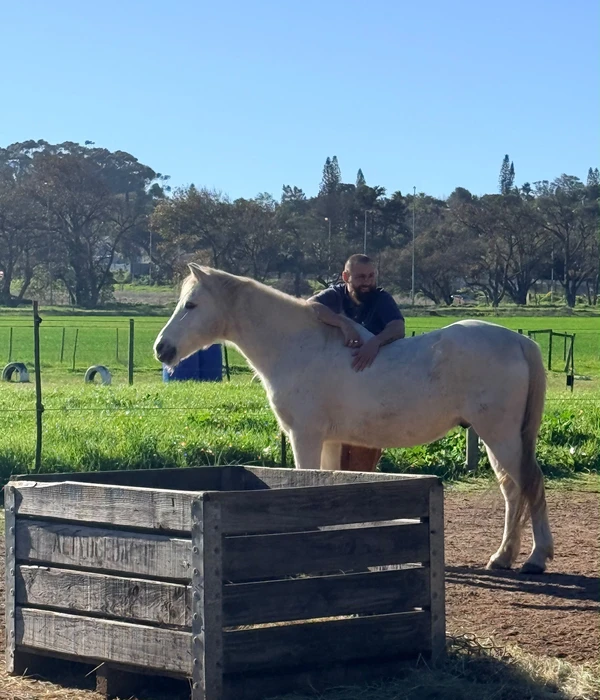
A bearded man gently strokes the neck of a white horse in a sunny, green outdoor pasture with trees in the background.

What Is Equine-Assisted Therapy?

Equine-assisted therapy is an experiential form of therapy that incorporates structured interactions with horses to support psychological, emotional, and behavioural growth. Sessions are designed around specific therapeutic goals and are led by qualified mental health professionals working alongside experienced equine specialists.

Unlike recreational horse riding, equine-assisted therapy focuses on the therapeutic process rather than developing riding skills. Many programmes involve activities carried out on the ground.These experiences encourage participants to explore their thoughts, emotions, and behaviours in real time, providing opportunities for reflection and personal growth.

Horses are particularly well suited to therapeutic work because they are highly responsive to human body language, emotional cues, and behaviour. They do not judge or hold preconceived opinions. Instead, they respond honestly and consistently to what they experience in the present moment, helping improve self-awareness.

A Look Inside our Rehab Centre

View photos of our treatment rooms, facilities, and therapeutic environments.

Benefits of Equine-Assisted Psychotherapy

Substance use disorders often affect far more than physical health. Many individuals also experience co-occurring mental health conditions such as anxiety, depression, or trauma, making recovery more complex.

Equine-assisted therapy addresses many of these underlying challenges through structured experiences. While each programme is different, the overall goal is to help participants develop skills that support both recovery and everyday life.

Horses naturally respond to a person’s body language, behaviour, and emotional state rather than their words. This creates honest, immediate feedback that helps participants recognise how their emotions influence their actions and relationships.

For example, someone approaching a horse while feeling anxious may notice the horse becoming hesitant or keeping its distance. As they become calmer and more focused, the horse’s response often changes. With guidance from a therapist, these moments encourage greater self-awareness, helping individuals regulate their emotions, build healthier boundaries, and strengthen trust throughout their recovery.

Difficulty managing emotions is common among people living with substance use disorders. Equine-assisted therapy creates opportunities to practise emotional regulation in a calm, supportive environment. Working safely around horses requires patience, focus, and the ability to remain present, helping participants become more aware of their emotional state without immediately reacting to it.

Therapists often combine these experiences with evidence-based techniques, and this integration allows participants to apply practical coping strategies while reflecting on their experiences with the horse. As emotional regulation improves, individuals may become better equipped to manage cravings, tolerate distress, and respond more effectively to stressful situations that might otherwise contribute to relapse.

Recovery often involves rebuilding confidence while repairing relationships affected by substance use. Working with horses encourages participants to develop their character through activities such as grooming, leading, and caring for the animal.

These shared experiences naturally strengthen communication, teamwork, and healthy boundaries while fostering a sense of achievement and purpose. Over time, participants can build trust in themselves and others, developing practical skills that support healthier relationships and long-term recovery both during and after treatment.

Meet the Liberty Home Team

Our multidisciplinary team brings experience, empathy, and expertise to every treatment plan.

Morgane

Morgane

Founder & Clinical Director

Vincent

Vincent

CEO

Mel

Mel

Managing Director

Tayob

Dr. Imraan

Psychiatrist

What Does the Research Say About Equine-Assisted Therapy?

Research suggests that equine-assisted therapy may support substance use recovery by improving emotional regulation, self-awareness, and engagement in treatment. Much of its value comes from the way horses respond to a person’s body language and emotions, creating opportunities for reflection and growth that complement traditional psychotherapy.

While findings are promising, the evidence is still developing, and more high-quality research is needed. Equine-assisted therapy should therefore be viewed as a complementary approach rather than a standalone treatment. It is most effective when integrated with evidence-based care, such as psychotherapy, medical detoxification, medication-assisted treatment, and relapse prevention planning.

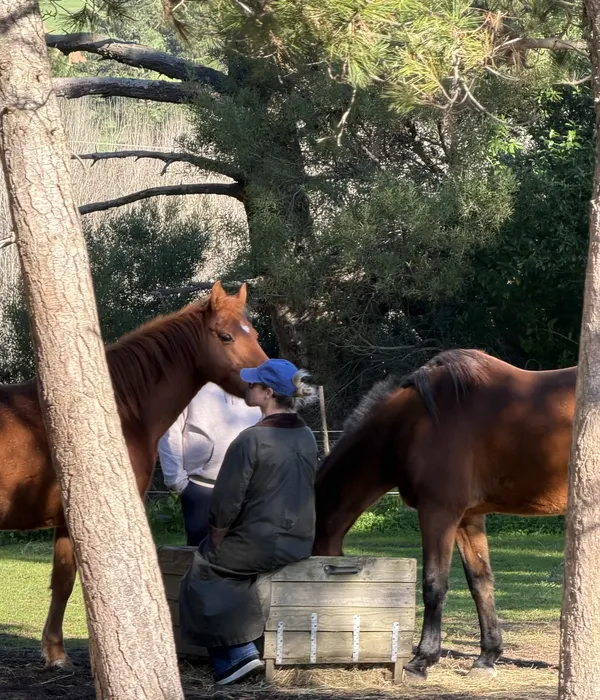
A person in a blue cap sits and shares a quiet, nose-to-nose moment with a brown horse in a sunlit field with trees.

Types of Equine-Assisted Therapy

The term “equine-assisted therapy” is often used as an umbrella term, but it actually describes several different approaches that incorporate horses into health, education, or rehabilitation. Understanding these differences is important because not every programme involving horses is designed to treat substance use disorders.

Equine-assisted psychotherapy (EAP) is the equine modality most commonly used in addiction and mental health treatment. It combines psychotherapy with structured activities involving horses to help individuals explore emotions, behaviours, and relationship patterns that may contribute to substance use.

Sessions are led by a licensed therapist alongside an equine specialist. Rather than focusing on riding, participants engage in activities such as grooming, leading, or observing a horse while reflecting on their experiences. The horse’s honest, nonjudgmental responses can encourage greater self-awareness, complementing the skills developed in traditional therapy.

Equine assisted learning focuses on personal development rather than clinical treatment. Through guided activities with horses, participants build communication, teamwork, confidence, and problem-solving skills that can support long-term recovery. While it promotes personal growth, it should complement rather than replace evidence-based addiction treatment.

Although they also involve horses, therapeutic riding and hippotherapy have different goals. Therapeutic riding uses horseback riding to improve confidence, balance, and coordination, while hippotherapy is delivered by rehabilitation professionals who use the horse’s movement to support physical, occupational, or speech therapy. Neither approach is designed to treat substance use disorders in the same way as equine-assisted psychotherapy.

liberty-therapy-woman-lab-coat-holding-tablet-page

Who Is a Good Candidate for Equine-Assisted Therapy?

Equine-assisted therapy may benefit people at different stages of recovery, particularly those living with co-occurring anxiety, depression, trauma, or relationship difficulties. Because horses respond to a person’s emotions and behaviour rather than their words, participants often develop greater self-awareness, emotional resilience, and healthier coping strategies.

Before participating, individuals should be assessed to ensure they are medically and psychologically stable. Equine-assisted therapy is most effective when integrated into a comprehensive treatment plan and introduced at the appropriate stage of recovery.

Integrating Equine-Assisted Therapy into Substance Use Treatment

Equine-assisted therapy is most effective when it forms part of a comprehensive treatment plan rather than being used on its own. While working with horses can promote emotional growth and build practical coping skills, it does not replace medical detoxification, psychotherapy, or medication-assisted treatment where appropriate.

Instead, equine-assisted therapy complements these evidence-based approaches by giving individuals the opportunity to apply what they learn in counselling to real-life situations. For example, someone developing healthier ways to manage stress in cognitive behavioural therapy (CBT) may practise those same skills while interacting with a horse during a therapy session. This combination helps reinforce emotional regulation, communication, and problem-solving in a meaningful way.

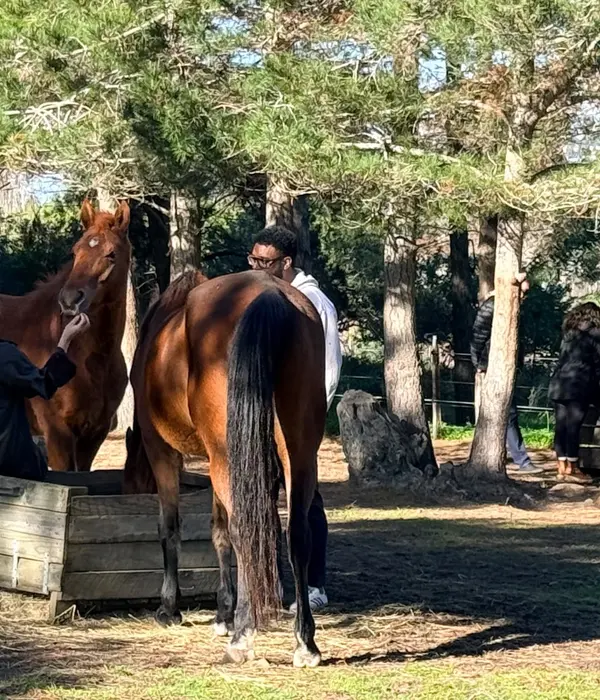
A man in a white hoodie interacts with a bay horse, and another person feeds a chestnut horse in a sunny, tree-filled outdoor enclosure.
liberty-environment-woman-sitting-rock-overlooking-ocean-enviroment-page

Safety, Risks, and Animal Welfare in Equine Therapy

Equine-assisted therapy should always be delivered in a safe, professionally supervised environment. Before taking part, individuals undergo an assessment to ensure they are medically stable and able to participate safely in activities involving horses.

Sessions are carefully planned to minimise risk, with trained staff providing instruction and supervision throughout. Depending on the programme, this may include the use of protective equipment, clear safety protocols, and activities that take place entirely on the ground rather than on horseback.

Just as participant safety is essential, so is the wellbeing of the horses involved. Reputable programmes follow high standards of animal welfare, ensuring horses receive appropriate veterinary care, adequate rest, and are never placed under unnecessary stress. Healthy, well-cared-for horses are fundamental to creating a safe and effective therapeutic environment.

Patient reviews and stories

Read the experiences of people who have been treated by us.

Posted on Google Google
Nicholas Markovitz profile picture
Nicholas Markovitz
Google star 1Google star 2Google star 3Google star 4Google star 5Trustindex verifies that the original source of the review is Google.
I’ve spent time in other rehabs before. Two of them, in fact. Both in Cape Town. Both marketed as “5-star” facilities with rolling lawns, beautiful properties, swimming pools and all the things that look attractive when your life is falling apart and you’re trying to convince yourself you’re still okay. What I’ve learnt now is that those things don’t keep you clean. They don’t dismantle denial. They don’t teach accountability. They don’t rebuild a human being from the inside out. Liberty Home does. I initially came to Liberty from South Africa for what was meant to be a six-week stay. By week three, I was told very honestly that because of the severity and complexity of my addiction, six weeks wasn’t enough. For the first time in my life, instead of resisting that reality, I accepted it completely and committed to the full three-month programme. That decision is changing my life in ways I don’t think I fully understood when I arrived. I came in believing I had a cocaine problem. What Liberty helped me understand was that the drugs were only the symptom. Underneath that was years of behavioural patterns, avoidance, emotional dishonesty and self-destruction that I had never properly confronted before. For the first time in my life, I was able to connect the dots. The team at Liberty stripped away my denial with compassion, honesty and consistency. Not through shame or fear, but through genuine care and accountability. And that distinction matters. One of the things that stood out most to me about Liberty is that it never felt institutional. The staff are deeply invested in the people there because they genuinely care about recovery and the lives attached to it. There are rules and structure, of course, but people follow them out of respect for the process, their peers and the staff themselves, not fear of punishment. As somebody who naturally rebels against authority, this was incredibly important for me. Throughout my time here I felt safe, held, understood and strangely at home. I never sat counting the days wanting to leave. I felt part of something. A family, really. I’m also bipolar, so having access to psychiatric support, nursing staff and properly managed medication alongside the emotional and addiction work was invaluable. Liberty’s approach is genuinely holistic. They understand that addiction is rarely just addiction. The programme itself is exceptional. I have a terrible attention span and usually drift mentally very quickly, but I was consistently engaged. There’s depth, structure, accountability, humour, connection and enough outdoor activities and movement to stop recovery from becoming emotionally suffocating. And an unexpected bonus: the gym is actually excellent. Somewhere between processing years of emotional chaos and rebuilding my life, I also managed to maintain a decent chest and shoulder split 🫠 Recovery is about balance, apparently. The food also deserves a mention. Healthy, generous portions and genuinely restaurant quality. It sounds like a small thing until you realise how important feeling physically cared for becomes when you’re rebuilding yourself emotionally. I also need to acknowledge a few people specifically. Morgan and Gideon, thank you for helping me arrive at the moment of clarity I had spent years running from. And Nuwaal… thank you for allowing me to confide in you so openly. You reminded me that recovery is serious business, but that laughter is medicine too. I’ve completed Phase 1 and am now in Phase 2, with plans to continue into The Lodge sober living afterwards because for the first time I’m not focused on simply “getting out” and returning to life unchanged. I’m focused on building a recovery strong enough to sustain a real life. If you’re reading this as somebody considering treatment, especially if you’ve tried before, I can say this honestly: Liberty Home is not selling you an illusion. It’s not recovery theatre. It’s the real work.

Owner's reply
Nicholas, thank you for taking the time to share something so honest, thoughtful and deeply personal. Your words truly mean a lot to the entire Liberty team. We’re incredibly grateful that you allowed us to walk alongside you during this part of your journey. It takes real courage to accept help, to stay when things become uncomfortable and to fully commit to change the way you have. The work you’ve done is yours, and everyone here has witnessed that growth firsthand. Thank you as well for recognising the care, dedication and humanity of the team. Morgan, Gideon, Nuwaal and everyone at Liberty genuinely care deeply about every person who walks through our doors. We’re proud of you for continuing your journey into Phase 2 and beyond. Recovery is not about escaping life, it’s about building one worth staying present for. And we’re glad the gym helped keep the chest and shoulder split alive too. With gratitude and respect, The Liberty Home Team
Posted on Google Google
Suzanne Brok profile picture
Suzanne Brok
Google star 1Google star 2Google star 3Google star 4Google star 5Trustindex verifies that the original source of the review is Google.
I have spent almost 11 weeks in this rehab facility. I really learned from all the groups and sessions that are in the program! staff members who actually care about their residents. My counsellor was Emmie, somehow she always seemed to know what was going on inside me. I am happy that i chose liberty home.

Owner's reply
Thank you so much, Suzanne, for your kind and thoughtful words. It truly means a lot to hear about your experience and to know that the program, group work, and individual support made a positive impact during your time with us. We’re especially glad to hear that you felt understood and supported by Emmie and the team, as building that level of trust and connection is at the heart of what we do. We’re grateful you chose Liberty Home and wish you continued strength and growth on your journey. Warm regards, The Liberty Home Team
Posted on Google Google
Tom Lecluyse profile picture
Tom Lecluyse
Google star 1Google star 2Google star 3Google star 4Google star 5Trustindex verifies that the original source of the review is Google.
Really great team putting their life and soul in your recovery
Posted on Google Google
Tom James profile picture
Tom James
Google star 1Google star 2Google star 3Google star 4Google star 5Trustindex verifies that the original source of the review is Google.
Well, I write this with the clearest and happiest head I have had in 20 years! I spent a couple of months at Liberty and want to thank Vincent, Morgan and the wider team for their care and support helping me overcome my addiction. From the moment I arrived I was looked after by the nurses, chefs and RA's. I feel like I cheated the withdrawal period as it was managed so well. The house and food were brilliant and it was so nice to walk or Uber to the many beaches. Doing this overseas out of the UK helped so much not to mention it meant I avoided winter! I wish everybody struggling could get treatment here. Now I can focus on being my true self!

Owner's reply
Thank you, Tom, for sharing such a meaningful and inspiring reflection. Hearing that you are experiencing the clearest and happiest state of mind you’ve had in 20 years truly means a lot to us, and it reflects the purpose behind everything we do. We’re honoured to have been part of your journey and deeply appreciate your kind words about Vincent, Morgane, and the entire team. Creating a safe, supportive and structured environment from day one is something we are fully committed to. We’re also glad that the setting, lifestyle and overall experience contributed positively to your time with us. Recovery is not just about change, but about reconnecting with yourself in the right environment. Thank you again for your trust. We wish you continued strength and clarity as you move forward. Warm regards, The Liberty Home Team
Posted on Google Google
Courtney Gess profile picture
Courtney Gess
Google star 1Google star 2Google star 3Google star 4Google star 5Trustindex verifies that the original source of the review is Google.
Liberty Secondary Care quite literally helped save my life. I attribute so much of my own growth in my recovery journey, to Liberty. When I arrived, I was clean but emotionally fragile and still caught in the thinking patterns that had fuelled my addiction. Liberty gave me far more than a place to stay. It gave me structure, accountability, dignity and a true sense of belonging. What makes Liberty exceptional is its staff. During some of my most turbulent and trying times, they stood steady and with so much consideration. They held faith in me when I did not believe in myself at all. Their consistency, patience and compassion carried me through moments when I felt overwhelmed, ashamed or unsure that I could continue. I was never treated as a problem to be fixed, but as a person worthy of care and recovery. The therapeutic support went deeper than abstinence. I was encouraged to look at my inner critic, my control patterns and the fears underneath my behaviours. I learned how to live in recovery and was encouraged to figure out what it is I enjoy, not just how to avoid relapse. I am lucky to share that I was a client at both the Secondary and Sober Living. I would not have made it in my journey had I not been at Liberty for those several months. There is a rare balance at Liberty of warmth and accountability. I was challenged to grow and supported when I struggled. That balance changed me. Today I feel more grounded, more responsible and more connected to my life, more than ever before. Liberty did not just help me stay clean. It helped me build the necessary foundations of a life worth staying clean for. I will always be deeply grateful.
Posted on Google Google
Louis Huygens profile picture
Louis Huygens
Google star 1Google star 2Google star 3Google star 4Google star 5Trustindex verifies that the original source of the review is Google.
Un établissement qui a réellement changé un tournant de ma vie. L’équipe est professionnelle, humaine et toujours à l’écoute. On se sent soutenu du début à la fin, sans jugement. Le programme est sérieux et m’a permis de me reconstruire et de repartir sur de bonnes bases. Un grand merci à toute l’équipe pour votre accompagnement. Je recommande sincèrement.
Posted on Google Google
Zanny profile picture
Zanny
Google star 1Google star 2Google star 3Google star 4Google star 5Trustindex verifies that the original source of the review is Google.
It’s very difficult to put words down to describe my experience at liberty home. I arrived there after five months in two different rehabs north of Cape Town in Plettenberg bay. I stayed with Liberty for 7 months in both primary care and secondary. Liberty home is like no other place. It was my family. It helped me grow in ways I didn’t think were possible. If you’re looking for a place that understands the complexities of dual diagnosis and the intersection of trauma and addiction this is it. Unlike my previous rehabs they understood and worked with neurodiversity which was an integral part of understanding my behaviour and learning how to cope with every day life. They supported me through my journey of self discovery and provided a safe space whilst I recovered from a very difficult time in my life. The location is perfect for those wanting to reconnect and recover a healthy lifestyle. Libertys programme includes a wide range of groups and activities to promote wellbeing and a sense of community. The house is warm and welcoming and quickly feels like home. The staff care more than anything and the relationships I built there will stay close to my heart. I could not recommend a better place of care, love and support to anyone. I can’t add any pictures for confidentiality, but one picture is taken from the sundeck at liberty home and the others are from the morning walk and trips to the beach down the road.

Owner's reply
Zanny, thank you for sharing such a heartfelt and thoughtful review. It means a great deal to the entire Liberty team to know that you felt safe, supported and truly understood during your time with us. Recovery is deeply personal, and we’re incredibly grateful that Liberty could be a place where you felt able to reconnect with yourself, grow and heal in a meaningful way. Your words about community, care and feeling “at home” reflect exactly what we strive to create every day. Thank you as well for recognising the team’s approach to trauma, dual diagnosis and neurodiversity. We know how important it is for people to feel seen as individuals, not just as a diagnosis or a struggle. We’re proud to have been part of your journey and truly appreciate the trust you placed in us during such an important chapter of your life. Wishing you continued strength, growth and peace on your recovery journey. With gratitude, The Liberty Home Team
Posted on Google Google
Granville West profile picture
Granville West
Google star 1Google star 2Google star 3Google star 4Google star 5Trustindex verifies that the original source of the review is Google.
I stayed at liberty home for 10 weeks and had an incredible experience. From the staff, the accommodation, the food, everything was excellent, an overall 10/10 life changing few weeks.
Posted on Google Google
Matthew Lee profile picture
Matthew Lee
Google star 1Google star 2Google star 3Google star 4Google star 5Trustindex verifies that the original source of the review is Google.
I was at Liberty home Addiction care, both the primary care and the sober living, for an extended period of time, because of my own external circumstances. What I can say without a shadow of a doubt is that at liberty, they CARE. This is different from a lot of other sober livings and treatment facilities in my experience. And to someone who’s “new” to treatment and in early recovery, this might come across as having ridiculous rules, standards, expectations, requirements, polices etc. But I was there for quite a long time and it allowed me to see for myself WHY these rules and policies are in place, because I’ve seen first hand what happens to the people that refuse to accept such things. I myself was at times discontent and unhappy with certain expectations or boundaries placed on me while at liberty, but only after learning and growing from them did I realise how and why they were necessary. There have been many times where the staff have liberty have gone above and beyond what they’re required to do professionally, Vincent, Morgane, Mel, Cindy, have done this for me, and not just for myself but for countless other clients that I know personally and witnessed. That’s doesn’t mean it’s always going to be easy for fun, recovery isn’t always fun, especially in early recovery, but I’m very grateful for everything I went through at liberty, especially the confrontation and consequences I recovered for my behaviour both during and before my time at liberty, because it shaped my recovery journey to allow me to be who I am today. I’m eternally grateful to the staff at liberty, some of whom I’m still in regular contact with, who see me as fellows in recovery now, not just an ex client. I can’t recommend Liberty highly enough for anyone that truly wants to turn their life around and find recovery. But if someone doesn’t really want to find recovery and serenity in their life, no amount of treatment at the best treatment Centers with the best treatment staff in the world is going to make them change. I truly believe liberty played a large part in the clean and serene life of recovery I live today. If you don’t believe anything I’ve said, let the photo speak for itself

Practitioner Credentials and Programme Standards in South Africa

When considering equine-assisted therapy, it is important to look beyond the programme itself and consider the qualifications of those delivering care.

In South Africa, psychotherapy should be provided by appropriately registered mental health professionals, such as psychologists registered with the Health Professions Council of South Africa (HPCSA) or social workers registered with the South African Council for Social Service Professions (SACSSP). Equine-assisted programmes should also involve experienced equine specialists who understand both horse welfare and safe therapeutic practice.

Some practitioners hold additional training through internationally recognised organisations, such as the Equine Assisted Growth and Learning Association (EAGALA) or PATH International. While these certifications demonstrate specialised training, they should complement, not replace, professional clinical registration.

liberty red stel clipboard prescription drugs
liberty-environment-man-meditating-beach-sunset-enviroment-page

Cost and Medical Aid Considerations in South Africa

The cost of equine-assisted therapy varies depending on the treatment setting, programme length, and whether sessions are delivered individually or as part of a broader rehabilitation programme.

Some residential rehabilitation centres include complementary therapies within their overall treatment fees, while others may offer equine-assisted therapy as an optional service. Medical aid cover also differs between providers and plans, particularly for complementary therapies.

Before beginning treatment, it is worth checking whether pre-authorisation is required and whether sessions delivered by registered healthcare professionals may qualify for reimbursement. Understanding what is included in programme fees and discussing costs with both the treatment provider and medical aid scheme can help individuals make informed decisions about their care.

Aftercare and Continuing Support

Recovery continues long after a structured treatment programme ends. Many people benefit from ongoing support that reinforces the emotional and behavioural skills developed during rehabilitation.

Depending on individual needs, aftercare may include ongoing psychotherapy, peer support groups, relapse prevention planning, family therapy, or continued participation in equine-assisted therapy. Maintaining these supports can help individuals manage challenges as they arise, strengthen healthy coping strategies, and reduce the risk of relapse.

While equine-assisted therapy can play a meaningful role in recovery, lasting change is built through consistent support, evidence-based care, and a personalised treatment plan that evolves alongside each individual’s progress.

liberty-woman-using-laptop-computer-sex-porn-addiction-page

Take the Next Step Towards Recovery

At Liberty Home Rehab, we believe lasting recovery is built on evidence-based care that addresses both the physical and emotional aspects of substance use. Where appropriate, complementary therapies such as equine-assisted therapy can be incorporated into a personalised treatment plan alongside psychotherapy.

If you or someone you care about is struggling with substance use, our team can help you explore the treatment options that best suit your individual needs. Reach out to Liberty Home Rehab to learn more about our programmes and take the first step towards long-term recovery.

lh-lodge-

References

Frequently Asked Questions

Is equine-assisted therapy effective for substance use treatment?

Current research suggests that equine-assisted therapy can improve treatment engagement, emotional regulation, and self-awareness when used alongside evidence-based addiction treatment. While the findings are encouraging, it should be viewed as a complementary therapy rather than a standalone treatment.

Equine-assisted therapy may benefit adults receiving treatment for substance use disorders, particularly those living with co-occurring anxiety, depression, trauma, or relationship difficulties. A clinical assessment is recommended to determine whether it is appropriate for an individual’s needs.

Not always. Many equine-assisted therapy sessions take place entirely on the ground and involve activities such as grooming, leading, or observing horses. Mounted activities may be included in some programmes but are not essential to the therapeutic process.

Yes. Equine-assisted therapy is designed to complement evidence-based approaches such as psychotherapy, cognitive behavioural therapy (CBT), medication-assisted treatment, and relapse prevention planning. It should not replace medical detoxification or other clinically recommended treatments.

When delivered by qualified professionals, equine-assisted therapy is generally safe. Participants are assessed before treatment, sessions are supervised, and reputable programmes follow clear safety procedures while prioritising the welfare of both participants and horses.

Mental health treatment should be delivered by appropriately registered healthcare professionals, such as psychologists registered with the Health Professions Council of South Africa (HPCSA) or social workers registered with the South African Council for Social Service Professions (SACSSP). Some programmes may also hold specialist equine-assisted therapy certifications through organisations such as EAGALA or PATH International.

Medical aid cover varies depending on the scheme and the treatment programme. Some rehabilitation centres include equine-assisted therapy within their overall fees, while others may charge separately. It is best to confirm benefits and any pre-authorisation requirements with both your medical aid provider and the treatment facility before beginning treatment.

Scroll to Top